If you've ever been prescribed a hormonal birth control pill or HRT and wondered why you feel anxious, moody, or unlike yourself — this article may be the answer you've been looking for. The culprit is often the progestin in your prescription, and understanding why it affects you differently than natural progesterone is one of the most important things you can do for your hormonal health.
Let's start with the basics — and yes, the difference really is that significant.
What Is Progesterone?
Progesterone is a key female sex hormone produced by the corpus luteum — a temporary structure that forms in the ovary after ovulation. It rises in the second half of your menstrual cycle (the luteal phase) and, if pregnancy does not occur, drops off to trigger your period.
Most people associate progesterone only with pregnancy, but its role in your body goes far beyond reproduction. Progesterone:
- Prepares the uterine lining for a fertilized egg and maintains early pregnancy
- Supports bone density by stimulating osteoblasts (bone-building cells)
- Protects the brain — it crosses the blood-brain barrier and promotes growth and repair of the myelin sheaths that insulate nerve fibers, supporting memory and cognitive function
- Calms the nervous system by acting on GABA receptors, the same receptors targeted by anti-anxiety medications — this is why I call progesterone the "keep calm and carry on" hormone
- Promotes sleep, particularly deep, restful sleep
- Supports thyroid function by aiding the conversion of T4 to active T3
- Balances estrogen, protecting the uterine lining and breast tissue from estrogen's proliferative effects
- Has anti-androgenic effects, helping to keep testosterone and DHT in check
- Supports fat burning by acting as a natural diuretic and encouraging the body to use fat for fuel
As you can see, progesterone is doing an enormous amount of work throughout your entire body — not just in your uterus. When progesterone levels are low, the downstream effects show up in your mood, sleep, skin, hair, thyroid function, and more. If you suspect low progesterone is an issue for you, read more in my article on low progesterone: why it happens and what you can do about it.
What Is a Progestin?
A progestin is a synthetic compound designed to mimic some of the actions of natural progesterone. Progestins are used in hormonal birth control (pills, patches, rings, implants, hormonal IUDs) and in conventional hormone replacement therapy (HRT).
Here is the critical distinction: progestins interact with progesterone receptors to produce progesterone-like effects in the uterus — specifically, they suppress ovulation, thicken cervical mucus, and alter the uterine lining. But that's where the similarities largely end.
Most progestins are created in a lab from testosterone — not from progesterone. Because of this chemical origin, many progestins have androgenic (testosterone-like) activity in the body, which can cause symptoms like acne, oily skin, hair thinning, and weight gain. A smaller number are derived from progesterone or spironolactone (an aldosterone antagonist), giving them different — sometimes anti-androgenic — activity profiles.
Unlike natural progesterone, progestins do not cross the blood-brain barrier in the same way. They cannot replicate progesterone's neuroprotective effects, and research shows that many progestins actually increase anxiety, worsen depression, and raise the risk of suicidal ideation — the opposite of what natural progesterone does.
What Progesterone and Progestins Have in Common
- Both thicken cervical mucus, making it harder for sperm to enter the uterus
- Both can suppress or alter ovulation when present in high enough doses
- Both tend to decrease libido (though natural progesterone's effect is more moderate and offset by ovulation in a natural cycle)
- Both change the uterine lining — though in very different ways (more on this below)
Where They Diverge: The Critical Differences
This is the section that matters most. The structural differences between natural progesterone and synthetic progestins translate into real-world differences in how you feel.
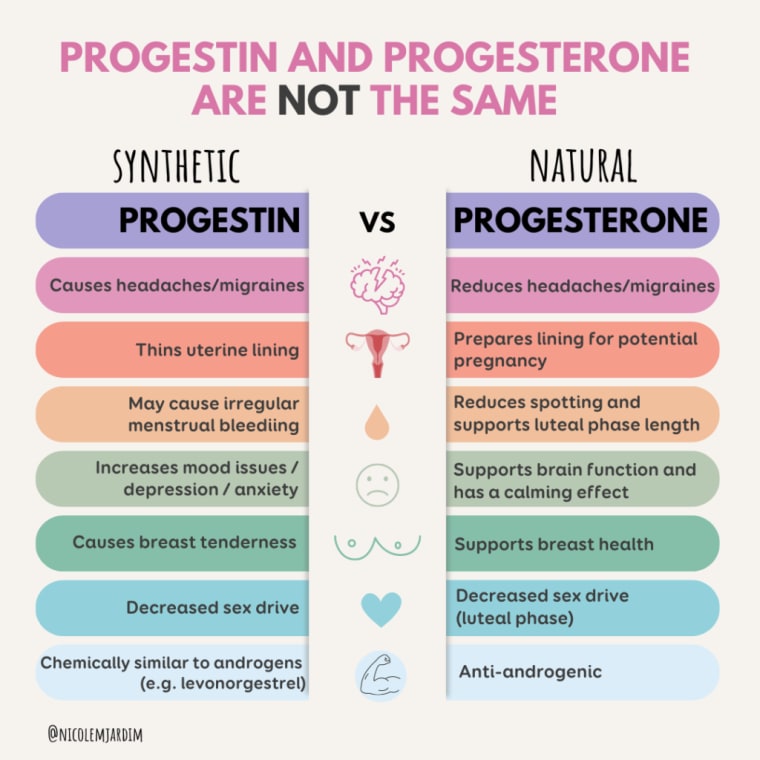
| Body System | Natural Progesterone | Synthetic Progestins |
|---|---|---|
| Uterine lining | Matures and stabilizes the endometrium; supports healthy shedding | Many progestins thin the lining, which can cause irregular spotting or stop periods entirely |
| Brain & mood | Calms the nervous system via GABA receptors; neuroprotective; reduces anxiety and depression | Many progestins are linked to anxiety, depression, and increased risk of suicidal ideation |
| Sleep | Promotes deep, restful sleep; mildly sedating at oral doses | No sedative benefit; some progestins may worsen sleep quality |
| Migraines & headaches | Protective; progesterone deficiency is associated with menstrual migraines | Progestins are a significant trigger for migraines and headaches |
| Breast health | Supports healthy breast tissue; does not increase breast cancer risk | Progestin use (especially MPA) is associated with increased breast tenderness and elevated breast cancer risk |
| Androgens | Anti-androgenic — helps counter excess testosterone and DHT | Many progestins (especially levonorgestrel, norethindrone) have androgenic activity: acne, hair thinning, weight gain |
| Bone health | Supports osteoblast activity; protective for bone density | No equivalent bone-building activity |
| Thyroid | Supports T4-to-T3 conversion | No equivalent thyroid benefit; some progestins may interfere with thyroid hormone binding |
The Different Generations of Progestins
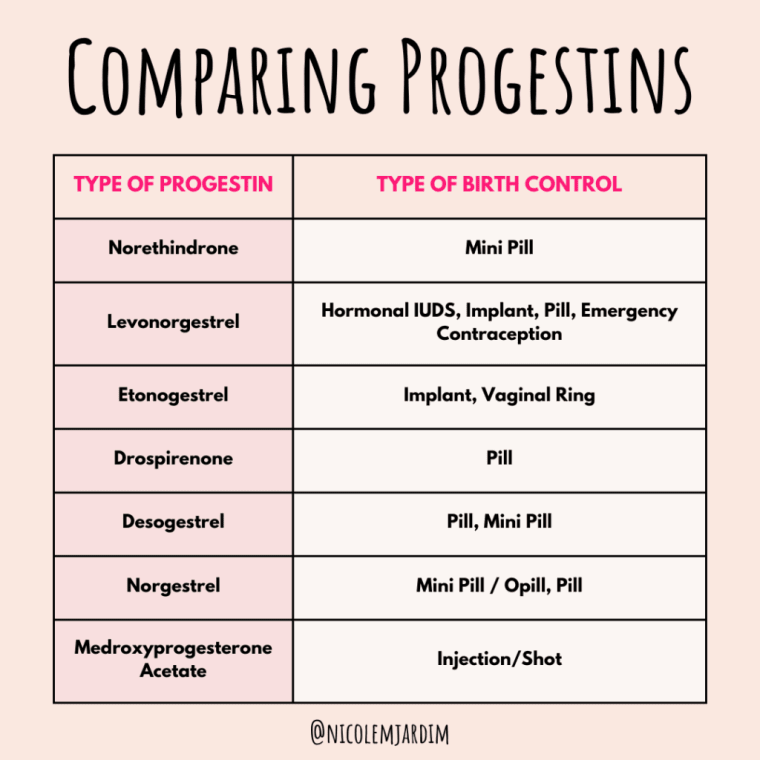
Not all progestins are equal. They are grouped into "generations" based on the molecules they were derived from and when they were developed. Each generation has a different activity profile — particularly when it comes to androgenic effects, blood clot risk, and cardiovascular impact.
First-Generation Progestins
Norethindrone (norethisterone) is one of the oldest and most widely used progestins, found in many combination pills and progestin-only ("mini") pills. It is derived from testosterone and has moderate androgenic activity, which means it can contribute to acne, oily skin, and hair shedding in sensitive individuals. It is also associated with mood disturbances and decreased libido.
Second-Generation Progestins
Levonorgestrel is found in many low-dose pills, the hormonal IUD (Mirena, Kyleena, Liletta), and emergency contraception. It is also derived from testosterone and has significant androgenic activity — often more than norethindrone. Levonorgestrel is chemically similar to androgen hormones, which is why acne, oily skin, and unwanted hair growth are common complaints among users. On the positive side, because levonorgestrel in the IUD acts mainly locally in the uterus, systemic androgenic effects are reduced compared to oral forms.
Third-Generation Progestins
Desogestrel and etonogestrel (the active metabolite of desogestrel, used in the implant and the NuvaRing) were developed specifically to reduce androgenic effects. They are more selective for progesterone receptors. However, third-generation progestins carry a higher risk of venous thromboembolism (blood clots) than second-generation progestins — a well-documented finding that has influenced prescribing guidelines in some countries.
Fourth-Generation Progestins
Drospirenone (found in Yasmin, Yaz, and similar pills) is derived from spironolactone rather than testosterone, giving it anti-androgenic and anti-mineralocorticoid properties. This means it can actually help with acne and bloating for some women. However, drospirenone also carries an elevated blood clot risk and has been associated with mood disturbances and depression in some users.
Medroxyprogesterone acetate (MPA), used in the injectable contraceptive Depo-Provera and in some conventional HRT formulations, deserves special mention. MPA is the progestin that featured in the Women's Health Initiative study — the large trial that found an increased risk of breast cancer, heart disease, and stroke in women using combined HRT. Subsequent research has made clear that much of this risk was driven by MPA specifically, not by progesterone as a class. Natural progesterone does not share these risks.
Wondering if your symptoms are hormone-related?
Take the free Hormone Health Assessment — 30 questions about your cycle, symptoms, and lifestyle — and receive a tailored action plan built for your body.
Take the Free Assessment →What About Bioidentical Progesterone?
Bioidentical progesterone is chemically identical to the progesterone your body makes. It is synthesized from plant sterols (typically from wild yam or soy) and processed into a compound that matches the exact molecular structure of human progesterone. This is different from "natural" — the word natural on a supplement label tells you very little about its actual structure or activity.
Bioidentical progesterone comes in two main forms:
Oral Micronized Progesterone
Oral micronized progesterone (the brand name version is Prometrium, though compounded versions are also available) is absorbed through the gut and partially converted in the liver. The metabolites produced during this conversion are actually what produce the calming, sleep-supportive effects — so taking oral progesterone at bedtime is often recommended for sleep issues and anxiety related to low progesterone. Oral progesterone is the best-studied bioidentical option and is considered a first-line choice in many evidence-based menopause guidelines.
Progesterone Cream
Progesterone cream is applied to the skin and absorbed transdermally. It bypasses the liver conversion that happens with oral progesterone, which means less of the calming metabolites are produced — but the progesterone itself is still absorbed and can support uterine protection and general hormone balance. Cream dosing and absorption can be variable, so working with a knowledgeable practitioner to monitor blood or saliva levels is advisable.
Who might benefit from bioidentical progesterone? Women in perimenopause (where progesterone drops first, often years before estrogen declines significantly), women with luteal phase deficiency, and women who have experienced significant side effects on synthetic progestins are all candidates worth discussing with a hormone-literate provider.
How to Talk to Your Doctor About This
The conversation between progesterone and progestins is not widely taught in conventional medical training, which means many practitioners use the terms interchangeably. Here are some specific questions you can bring to your appointment:
- "Is the progestogen in this prescription natural progesterone or a synthetic progestin? Which specific progestin is it?"
- "I've read that different progestins have different androgenic and mood-related profiles. Given my symptoms (acne / low mood / migraines / hair thinning), which progestin is least likely to worsen them?"
- "I'm interested in learning more about bioidentical progesterone. Is that something you can prescribe or refer me for?"
- "Can we test my progesterone levels to see if low progesterone might be contributing to my symptoms?"
If you are currently using hormonal birth control and experiencing symptoms like low mood, anxiety, loss of libido, or migraines, please do not stop your prescription abruptly without speaking to your provider first. There are options — different progestins, different delivery methods, non-hormonal alternatives — and you deserve a provider who will work through them with you.
The Bottom Line
Progesterone and progestin are not the same. Progesterone is a multi-tasking hormone that supports your brain, bones, thyroid, sleep, mood, and cycle health. Progestins are synthetic compounds that can partially mimic progesterone's uterine effects — but they do not replicate its broader benefits, and many carry their own risks and side effects depending on their chemical structure and generation.
Understanding this difference is not just academic. It has real implications for how you feel every day, and for the long-term decisions you make about birth control and hormone therapy. You are entitled to that information — and to a provider who takes it seriously.