
Of all the hormones that get talked about in women's health circles, progesterone may be the most misunderstood. Most people know it vaguely as the "pregnancy hormone" — important if you're trying to conceive, and not much to think about otherwise. But that framing misses almost everything that matters.
Progesterone is a system-wide hormone. It shapes the quality of your sleep, the stability of your mood, the health of your bones, how your thyroid functions, and whether your period is regular and comfortable or chaotic and painful. When progesterone is low — or low relative to estrogen — you feel it everywhere. The premenstrual week becomes a different kind of life. Anxiety spikes, sleep falls apart, spotting shows up before your period, and your energy flatlines.
This article gives you the full picture: what progesterone actually does, how to recognize when it's low, the ten most common root causes, how to test properly, and a comprehensive protocol for addressing it naturally.
What Progesterone Actually Does (Beyond Fertility)
Progesterone is produced primarily after ovulation, when the follicle that released the egg transforms into a temporary gland called the corpus luteum. The corpus luteum pumps out progesterone for the entire second half of your cycle, and this is when progesterone's wide-ranging effects are most felt.
Here is what progesterone is actually doing in your body:
- Brain and mood: Progesterone converts in the brain to allopregnanolone, a powerful neurosteroid that activates GABA receptors — your brain's primary calming system. This is why adequate progesterone produces feelings of calm, contentment, and resilience in the second half of your cycle, while low progesterone creates anxiety, irritability, and emotional volatility.
- Sleep: Allopregnanolone also has a sedating effect, promoting deep, restorative sleep. Low progesterone in the luteal phase is one of the most common but least diagnosed causes of premenstrual insomnia.
- Thyroid function: Progesterone supports thyroid hormone activity by increasing thyroid receptor sensitivity. Low progesterone and hypothyroidism frequently co-occur and reinforce each other.
- Anti-anxiety and anti-inflammatory: Beyond its GABA-enhancing effects, progesterone is a natural anti-inflammatory hormone. When it drops prematurely, inflammatory signals rise — contributing to cramps, breast tenderness, and the classic premenstrual "everything aches" feeling.
- Bone density: Progesterone stimulates osteoblasts — the cells that build new bone. Estrogen protects bone by slowing breakdown; progesterone actually builds it. Long-term low progesterone is a significant but underrecognized contributor to early bone loss.
- Fat metabolism: Progesterone helps your body use fat as fuel. When it's low and estrogen is relatively dominant, the body tends to store more fat, particularly around the abdomen and hips in the premenstrual week.
- Balancing estrogen: Progesterone and estrogen work in opposition on a hormonal seesaw. Estrogen stimulates cell growth and builds the uterine lining; progesterone counterbalances by limiting that proliferative effect. When progesterone is insufficient, estrogen goes unchecked — a state commonly called estrogen dominance.
- Heart and cardiovascular health: Progesterone helps maintain healthy blood pressure and vessel tone, and works with estrogen to support cardiovascular function.
Signs and Symptoms of Low Progesterone
Because progesterone acts across so many body systems, low levels produce a wide and seemingly unrelated scatter of symptoms. What they share is timing: they tend to appear or worsen in the luteal phase — the week or two before your period — and resolve (or at least improve) once your period begins.
PMS and PMDD — mood swings, anxiety, overwhelm, cramps, migraines, breast soreness, bloating
Spotting before your period — brown or pink discharge 3+ days before bleeding begins
Short luteal phase — a second half of the cycle shorter than 10 days
Luteal phase anxiety and mood swings — feeling like a different person the week before your period
Poor sleep premenstrually — difficulty falling or staying asleep in the 1–2 weeks before your period
Fibrocystic or tender breasts — lumpy, sore, or swollen breasts in the luteal phase
Heavy or long periods — periods lasting more than 7–8 days, or with significant clotting
Infertility and recurrent miscarriage — difficulty conceiving or sustaining early pregnancy
Endometriosis and fibroids — conditions driven by unopposed estrogen, which worsen when progesterone is insufficient
Low thyroid symptoms — fatigue, cold hands and feet, hair thinning, brain fog that worsens in the luteal phase
An important nuance: "low progesterone" does not always mean a low number on a blood test. You can have technically normal progesterone levels but still feel every symptom above if cortisol is blocking your progesterone receptors — a mechanism covered in detail in the root causes section below. The ratio of progesterone to estrogen matters as much as the absolute level.
How to Test Progesterone — and What the Numbers Mean
Progesterone must be tested at the right time in your cycle to mean anything. Because progesterone is produced almost exclusively after ovulation, testing it before ovulation occurs will return a very low number — less than 1.5 ng/mL — which does not indicate a problem. It simply reflects that ovulation hasn't happened yet.
The goal is to test 5–7 days after ovulation, which is when progesterone is at its midluteal peak. If your cycle is regular with a period arriving around days 27–29, testing on days 19–21 is generally appropriate. For a broader range of cycle lengths, count back 7 days from when your period is due — that's your testing window.
For full guidance on timing, see when and how to test your progesterone levels.
In terms of what the numbers mean:
- Above 7 ng/mL confirms ovulation has occurred (research threshold)
- 10–25 ng/mL is the optimal midluteal range — I like to see levels in this range for women who are symptomatic
- Below 10 ng/mL in the midluteal phase, combined with symptoms, suggests inadequate progesterone production
If your levels fall in the normal range but you are still experiencing all the symptoms of low progesterone, cortisol receptor competition may be the culprit — more on that shortly.
Get your personalized hormonal health protocol
Take the free Hormone Health Assessment — 30 questions about your cycle, symptoms, and lifestyle — and receive a tailored action plan built for your body.
Take the Free Assessment →The 10 Root Causes of Low Progesterone
Progesterone deficiency almost always traces back to problems with ovulation — either ovulation isn't happening, is happening inconsistently, or the corpus luteum formed after ovulation is not healthy enough to produce adequate progesterone. Understanding why that is requires looking at the full list of contributing factors.
1. Chronic Stress (Cortisol and Pregnenolone Steal)
This is the most common and most underestimated root cause. Chronic stress disrupts your cycle through two overlapping mechanisms.
First, pregnenolone steal: all steroid hormones — cortisol, progesterone, estrogen, testosterone — are made from the same starting material: cholesterol converted into pregnenolone. Under chronic stress, your body redirects pregnenolone toward cortisol production, leaving less available to make sex hormones. Progesterone production suffers directly.
Second, cortisol receptor competition: cortisol and progesterone have structurally similar receptors. When cortisol is chronically elevated, it occupies progesterone receptors throughout the body and brain — blocking progesterone from getting in. This means you can have normal blood levels of progesterone but still feel every symptom of deficiency, because your cells simply cannot access it.
2. Anovulatory Cycles (No Corpus Luteum = No Progesterone)
Progesterone is an ovulation-dependent hormone. If you do not ovulate, your body produces virtually no progesterone. Anovulatory cycles — cycles where no egg is released — can still produce a bleed (driven by estrogen buildup and then withdrawal), which is why many women with anovulatory cycles assume everything is fine. But without ovulation, there is no corpus luteum, and without a corpus luteum, there is no meaningful progesterone production.
3. Poor Ovulation Quality
You can ovulate consistently and still have low progesterone if the corpus luteum is compromised. The health of your ovaries and the quality of your follicles directly determines how much progesterone the corpus luteum can produce. Poor nutrition, nutrient deficiencies, poor blood flow to the ovaries, and mitochondrial dysfunction all impair corpus luteum function — resulting in a short luteal phase and insufficient progesterone even when ovulation is confirmed.
4. Thyroid Dysfunction
The ovaries need thyroid hormone to function properly. Both hypothyroidism and subclinical thyroid dysfunction impair follicle development, reduce the quality of ovulation, and diminish corpus luteum progesterone output. This relationship runs in both directions: low progesterone also reduces thyroid receptor sensitivity, creating a cycle of mutual dysfunction. If you have low progesterone, thyroid function should always be evaluated — including TSH, free T3, free T4, and thyroid antibodies.
5. Nutritional Deficiencies
Several key nutrients are required for healthy ovarian function and progesterone synthesis. Deficiency in any of them can impair production:
- Zinc — essential for follicle development and LH receptor function in the ovary
- Vitamin B6 (P5P) — required for progesterone synthesis and for the metabolism of estrogen; B6 deficiency is strongly associated with PMS
- Vitamin C — heavily concentrated in the corpus luteum and shown in research to directly support progesterone production
- Vitamin E (mixed tocopherols) — protects follicles and the corpus luteum from oxidative damage; improves blood flow to the ovaries
- Magnesium — required for hundreds of enzymatic reactions including steroid hormone synthesis; chronically depleted by stress
6. Excess Prolactin (Hyperprolactinemia)
Prolactin is normally elevated postpartum to support breastfeeding and suppress ovulation. But prolactin can rise outside of this context — due to stress, thyroid problems, certain medications, or a benign pituitary adenoma — and when it does, it disrupts the LH surge that triggers ovulation. No ovulation, no corpus luteum, no progesterone. Elevated prolactin should be ruled out in any case of low progesterone or cycle irregularity.
7. Excess Estrogen (Relative Deficiency)
Low progesterone is not always about absolute production. If estrogen is elevated — from excess body fat (which converts androgens to estrogen), impaired estrogen clearance through the liver or gut, or environmental estrogen exposure — progesterone may be technically adequate but functionally insufficient relative to estrogen. The ratio is what governs symptoms. This is why improving estrogen metabolism through gut health and liver support is a central part of any progesterone protocol.
8. Insulin Resistance and PCOS
Insulin resistance disrupts the hormonal signaling that drives ovulation. Elevated insulin stimulates the ovaries to produce androgens (testosterone and DHEA-S) rather than preparing follicles for ovulation. PCOS — which is fundamentally a condition of elevated androgens and sporadic or absent ovulation — almost always involves some degree of insulin resistance. Stabilizing blood sugar is therefore one of the most direct ways to improve ovulation frequency and progesterone output.
9. Perimenopause and Aging
Progesterone is the first hormone to decline as the ovaries begin winding down in the years before menopause, often starting in the early-to-mid forties. Ovulations become less frequent, and those that do occur may involve a less robust corpus luteum. This is why the perimenopausal decade is so often characterized by worsening PMS, heavier periods, spotting, mood instability, and disrupted sleep — all classic low progesterone symptoms — even before estrogen starts fluctuating significantly.
10. Post-Pill Recovery
Hormonal contraceptives — particularly combined estrogen-progestin pills — suppress the HPO axis for the duration of use. After discontinuation, the hypothalamus and pituitary need time to re-establish normal pulsatile hormone signaling to the ovaries. In the months after stopping the pill, ovulation may be sporadic, delayed, or of poor quality — resulting in low progesterone until the axis fully recovers. This can take anywhere from one to several months, sometimes longer depending on how long the pill was used and individual factors.
The Natural Protocol for Low Progesterone
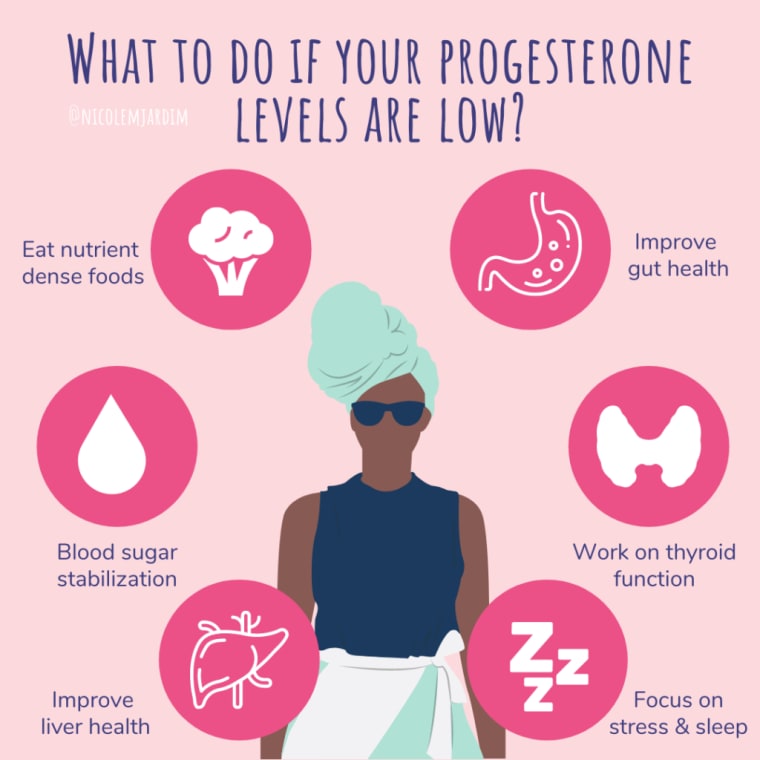
Because progesterone is downstream of ovulation, and ovulation is downstream of overall metabolic and hormonal health, addressing low progesterone means working on the foundations first. These steps are sequential — build from the ground up.
Step 1: Track and Confirm Ovulation
The most important first step is knowing whether you are ovulating and, if so, when. Basal body temperature (BBT) charting combined with LH strips gives you a complete picture of your ovulatory pattern and the length of your luteal phase. If your luteal phase is consistently under 10 days, you have a short luteal phase that needs direct attention. If BBT shows no clear thermal shift, you may not be ovulating at all — which means the rest of the protocol should be focused on restoring ovulation, not just boosting progesterone.
Step 2: Stress Reduction Protocol
Given that chronic stress is the most common driver of low progesterone, downregulating the stress response is non-negotiable. This is not about eliminating stress — it's about building enough nervous system resilience that daily stressors don't continuously suppress your hormones.
- Prioritize 7–9 hours of sleep with a consistent bedtime
- Practice daily nervous system downregulation: deep breathing with extended exhales, yoga nidra, gentle movement, time in nature
- Reduce high-intensity exercise if your cycle is disrupted — shift toward walking, yoga, and moderate-intensity strength training until cycles normalize
- Work on boundaries and realistic expectations around workload and daily demands
Step 3: Blood Sugar Stability
Every blood sugar spike and crash sends a cortisol signal to the adrenal glands — adding to the cumulative stress load and further impairing ovulation. Stabilizing blood sugar is one of the most underestimated interventions for progesterone production, and I have seen many clients ovulate more regularly simply by addressing this.
- Eat protein, fat, and fiber at every meal
- Start the day with a protein-rich breakfast within 1–2 hours of waking
- Avoid long gaps between meals, especially in the luteal phase
- Reduce refined sugar and ultra-processed carbohydrates
- Pair any carbohydrate-rich foods with a source of protein or fat
Step 4: Gut Health Support
Gut dysbiosis creates a chronic, low-grade inflammatory environment that directly impairs ovarian function. The endotoxins produced by pathogenic gut bacteria trigger inflammatory signals in the ovary, disrupting follicle development and corpus luteum function. A healthy gut is also essential for clearing metabolized estrogen — poor estrogen clearance means higher circulating estrogen, which worsens the progesterone-to-estrogen imbalance.
Practical gut support steps: Stop drinking fluids 20 minutes before meals and 30 minutes after (to preserve stomach acid and digestive enzyme concentration). Consider digestive bitters before meals to stimulate stomach acid. Add a digestive enzyme with meals. Introduce fermented foods — 1 tablespoon of sauerkraut or kimchi daily — or a spore-based probiotic if you have histamine sensitivity.
Step 5: Targeted Supplements
Once the foundations above are in place, the following supplements have strong evidence for supporting ovarian function and progesterone production. Use them together for synergistic effect, and give yourself 3–4 months to assess their impact — this is not a quick fix.
- Vitamin C — 500–1,000 mg daily (divided doses of 500 mg). Research shows vitamin C directly increases progesterone production, likely through its protective effect on the corpus luteum. It also supports adrenal function and is rapidly depleted by stress.
- Vitamin E — 400 IU daily as mixed tocopherols. Choose a supplement containing all forms of vitamin E (mixed tocopherols and tocotrienols, not just alpha-tocopherol alone). Vitamin E improves blood flow to the ovaries, protects follicles from oxidative damage, and supports corpus luteum health.
- Magnesium glycinate — 300–400 mg before bed. Magnesium is required for progesterone synthesis and is chronically depleted by stress. Glycinate form is gentle on digestion and has excellent bioavailability. It also reduces cortisol levels and supports the deep sleep that progesterone normally promotes.
- Zinc — 15–30 mg daily. Zinc is essential for follicle development and LH receptor function. Take with food to reduce nausea, and do not exceed 40 mg daily without medical supervision (excess zinc depletes copper).
- Vitamin B6 as P5P — 25–50 mg daily. P5P is the active form of B6 and is required for progesterone synthesis and estrogen metabolism. It is particularly effective for luteal phase PMS, mood symptoms, and breast tenderness.
- Cod liver oil or omega-3 fatty acids — 1 tsp cod liver oil or 1,000–2,000 mg fish oil daily. Cod liver oil provides preformed vitamin A (retinol), which plays a direct role in follicle development and ovarian steroid hormone production. Research also suggests vitamin A deficiency is a factor in PCOS. Note: very high doses of fish oil can theoretically reduce prostaglandins needed for ovulation — stay within this recommended range.
- Adaptogens — ashwagandha and rhodiola rosea are the best researched for HPA axis support, cortisol normalization, and indirect progesterone support. Ashwagandha is directly associated with improved progesterone levels in the research.
Step 6: Seed Cycling
Seed cycling is a food-based practice that uses the phytoestrogens and lignans in specific seeds to gently support hormone balance across the cycle. In the follicular phase (days 1–14), consume 1 tablespoon each of ground flaxseeds and pumpkin seeds daily. In the luteal phase (days 15–28), switch to 1 tablespoon each of ground sesame seeds and sunflower seeds. The evidence base is mostly anecdotal, but many women find it helpful as a gentle, low-risk adjunct to the broader protocol.
Step 7: Vitex (Chaste Berry)
After at least 90 days on the foundation supplements above, consider adding vitex (chaste berry) if your cycles are still not improving adequately.
Vitex works by raising dopamine, which lowers prolactin, which then raises LH — improving the chance of consistent ovulation. It is particularly useful for women with mildly elevated prolactin, post-pill recovery, or cycles that are irregular or lengthening. It is not a quick fix: results typically emerge over 3–6 months of consistent use.
How to take vitex: 500 mg capsule daily in the morning, starting on day 5 of your cycle and stopping on day 1 of the next period. If not menstruating, take continuously. Can increase to 1,000 mg after the first month if there's no response. Important caution: Vitex is a powerful herb and should ideally be used under practitioner guidance. It can cause mild side effects including nausea, spotting, increased menstrual flow, or low mood in some women. Discontinue if these occur.
Step 8: Castor Oil Packs
Castor oil packs applied over the lower abdomen 2–3 times per week support blood flow to the ovaries and uterus, reduce local inflammation, and support liver detoxification of estrogen. This is a low-risk, supportive practice that many women find genuinely helpful for pelvic health and cycle regularity.
Step 9: Bioidentical Progesterone (When Natural Approaches Are Not Enough)
Bioidentical progesterone — structurally identical to the progesterone your body produces — may be appropriate when natural approaches are insufficient, particularly for women in perimenopause, those with a confirmed short luteal phase that is not improving, or those with significant PMDD, heavy bleeding, or recurrent miscarriage.
My strong preference is to address root causes first — or at minimum, in parallel — rather than simply layering progesterone on top of unresolved dysfunction. Supplementing progesterone without investigating why levels are low is a band-aid approach that leaves the underlying causes to compound over time.
Guidelines for use:
- Progesterone should only be used after testing has confirmed low midluteal levels, or when there is a clear symptom picture consistent with luteal phase deficiency
- Always take it cyclically — starting after confirmed ovulation and stopping before or at the onset of menstruation — to avoid suppressing ovulation
- Work with a practitioner who can prescribe compounded oral micronized progesterone when possible; this is better absorbed and more customizable than most over-the-counter creams
- If using topical progesterone cream, rotate application sites (inner thigh, lower abdomen, wrists, chest) to prevent tissue accumulation
- Start low — 5–10 mg topically, or as directed by your prescriber — and adjust based on symptom response
- Always take it at night; progesterone is sedating and works with your body's natural sleep drive