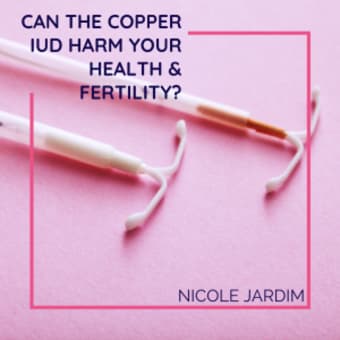
If you have been researching non-hormonal contraception, the copper IUD — sold in the US as Paragard — has probably come up as a top recommendation. It is long-acting, highly effective, reversible, and completely free of synthetic hormones. For many women, it is a genuinely great option. But "non-hormonal" does not mean "no side effects," and the copper IUD has a set of real consequences that rarely get the attention they deserve in a typical provider consultation.
This article covers how the copper IUD works, why so many women choose it, and — most importantly — the downsides that are often undersold, including what elevated copper does to your body, your mood, your mineral balance, and your cycle. You will also find a guide to who might be a good candidate, who should think carefully before choosing it, and how to support your body if you already have one.
What Is the Copper IUD?
Paragard is a small, T-shaped device made of plastic and copper wire that is placed inside the uterus by a healthcare provider. It is the only copper IUD approved in the United States and is FDA-approved for up to 10 years of use — though clinical evidence supports efficacy for up to 12 years in some studies. It is also approved for use as emergency contraception when inserted within 5 days of unprotected sex.
The copper IUD works through a completely different mechanism than hormonal contraceptives. Rather than altering your hormone levels, it prevents pregnancy via the spermicidal effect of copper ions. Copper is toxic to sperm: it impairs sperm motility and viability, alters the uterine and fallopian tube environment to make it inhospitable to fertilization, and may also affect the uterine lining in ways that reduce the likelihood of implantation. The result is over 99% effectiveness — comparable to hormonal methods — without any synthetic hormones involved.
Because it contains no hormones, the copper IUD does not suppress ovulation, does not thin the uterine lining as a primary mechanism, and does not interfere with your menstrual cycle at the level of the brain-ovary axis. Your natural hormonal rhythms continue as they would without any contraceptive intervention.
Why Women Choose the Copper IUD
The appeal of the copper IUD is easy to understand, particularly for women who have had negative experiences with hormonal contraception or who want their natural cycle intact:
- Completely non-hormonal: No synthetic estrogen, no synthetic progestin — nothing that will alter the hormonal signals your brain and ovaries exchange each month.
- Ovulation continues normally: Because the copper IUD does not suppress ovulation, you retain all the hormonal benefits that come from a complete cycle — including the natural progesterone produced after ovulation, the mid-cycle energy and libido peak associated with ovulation itself, and the full rise and fall of estrogen and progesterone through each phase.
- Your period remains a readable health signal: Unlike the Mirena or combined pill, the copper IUD does not mask your cycle. Women who use fertility awareness methods, track cycle symptoms for health monitoring, or simply value their menstrual cycle as a monthly check-in can continue to do so.
- Long-acting and reversible: Effective for up to 10 years, but fertility typically returns quickly after removal — often within the first cycle.
- A genuine break from synthetic hormones: For women coming off years of hormonal contraception who want to give their body a rest from synthetic hormones while maintaining highly effective contraception, the copper IUD can be a meaningful bridge.
- Good option postpartum: The cervix is more relaxed after delivery, which can make insertion more comfortable. It is safe to use while breastfeeding and does not affect milk supply.
These are legitimate and compelling reasons. The copper IUD fills a genuine gap in contraceptive options for women who want long-term effectiveness without hormonal intervention. But the complete picture requires an honest look at what the copper IUD can do to your body that the marketing leaflet underemphasizes.
The Real Downsides — What Is Often Undersold
1. Heavier Periods and More Painful Cramping
This is the most commonly reported and most consistently documented side effect of the copper IUD, and it deserves to be stated plainly: the copper IUD typically makes your periods heavier and your cramps worse, often significantly so, particularly in the first 3 to 6 months after insertion.
Research consistently shows that menstrual blood loss increases by 20–50% on average in copper IUD users. For women who already had manageable periods, this can mean a noticeable shift to heavier flow and more significant cramping. For women who already had heavy periods before insertion, the copper IUD can push bleeding into a range that causes iron deficiency anemia, significant fatigue, and real disruption to daily life.
The mechanism involves prostaglandins — the inflammatory compounds that drive uterine contractions during menstruation. Copper stimulates a local inflammatory response in the uterus that elevates prostaglandin production, which in turn intensifies cramping and increases blood flow. For most women, periods do become somewhat lighter again after the 6-month adjustment period, but a subset of women never fully return to their pre-IUD baseline, and some find the change significant enough to request removal.
2. Copper Toxicity and Its Effect on Zinc and Progesterone
This is the side effect that receives the least mainstream attention but may have the most wide-reaching hormonal consequences. The copper wire in the Paragard continuously releases small amounts of copper ions — that is, after all, what makes it work as a contraceptive. But those copper ions do not stay neatly confined to the uterine cavity. Over time, copper can accumulate systemically, particularly in women who already have suboptimal zinc status or who are slow copper metabolizers.
Here is why this matters for your hormones: copper and zinc are antagonistic minerals. High copper suppresses zinc throughout the body. And zinc is not a minor player in hormonal health — zinc is essential for the production of progesterone. Specifically, zinc is required by the corpus luteum (the structure that forms after ovulation) to produce adequate progesterone in the luteal phase of your cycle.
When copper chronically displaces zinc, the result can be a relative progesterone deficiency — not because ovulation is being suppressed (it isn't), but because the machinery needed to produce robust post-ovulatory progesterone is being undermined at the mineral level. The downstream effects of low progesterone include short luteal phases, spotting before periods, anxiety, sleep disruption, worsening PMS, and mood instability in the second half of the cycle.
This is a real and underappreciated pathway through which a "hormone-free" contraceptive can create meaningful hormonal disruption.
3. Copper Excess Symptoms
Elevated copper has a well-documented set of symptoms that many women do not connect to their IUD because they were never told it was a possibility. Copper excess symptoms include:
- Anxiety and racing thoughts — copper stimulates excitatory neurotransmitters, particularly dopamine and norepinephrine, and can drive a chronically wired, anxious state that feels like generalized anxiety disorder
- Insomnia — particularly difficulty falling asleep or staying asleep due to elevated norepinephrine activity
- Mood swings and emotional reactivity
- Fatigue — paradoxical but common; adrenal stress related to copper-driven neurotransmitter imbalance can contribute to burnout
- Brain fog and poor concentration
- Histamine intolerance symptoms — including flushing, hives, headaches, nasal congestion, and gut symptoms. Copper is a cofactor for histamine — it actually drives histamine production in the body. Women with histamine intolerance who have a copper IUD may find their histamine symptoms worsen or become harder to manage
Not every woman with a copper IUD will develop copper toxicity. Copper metabolism varies significantly between individuals based on genetics, diet, gut health, and overall zinc status. But if you have a copper IUD and have developed unexplained anxiety, insomnia, or worsening mood — especially if you felt fine before insertion — copper accumulation is worth investigating.
4. PCOS-Like Androgen Effects in Some Women
A smaller but notable subset of copper IUD users report androgen-related symptoms including acne, increased facial or body hair, and hair thinning — symptoms that mimic PCOS but emerge after IUD insertion. The mechanism is not fully established, but the zinc-copper connection is likely relevant here as well: zinc is an androgen modulator, and when zinc is suppressed by elevated copper, the body's ability to keep androgens in check may be compromised. Some researchers have also proposed that the prostaglandin-driven inflammatory state created by the copper IUD may contribute to androgen imbalance in susceptible women.
5. Insertion Pain
IUD insertion can be significantly painful, and the degree of discomfort varies widely. For women who have not given birth vaginally, insertion tends to be more painful as the cervix is less dilated and more resistant. Cramping during and after insertion is common and can last from hours to a day or two. You are fully entitled to ask your provider in advance about pain management options, including topical cervical anesthesia, a paracervical block, or prescription NSAIDs before the procedure. Do not accept "just relax" as a pain management plan — advocate for your comfort.
Who Might Be a Good Candidate
The copper IUD is a genuinely excellent choice for specific situations. You are likely a good candidate if:
- You already have light to moderate periods that would tolerate becoming somewhat heavier without causing major disruption
- You have been on hormonal contraceptives for an extended period and want a break from synthetic hormones while maintaining highly effective contraception
- You are postpartum with a more relaxed cervix, making insertion more comfortable
- You have good zinc status and tolerate minerals well
- You do not have a history of anxiety, insomnia, or histamine reactivity that might be worsened by elevated copper
- You want to continue tracking your cycle for fertility awareness or health monitoring purposes
- You need emergency contraception and want to transition to long-term contraception at the same time
Who Should Think Carefully Before Choosing It
The copper IUD deserves extra consideration — and potentially a different option — if you:
- Already have heavy or painful periods — adding the copper IUD's prostaglandin-amplifying effect to an already difficult cycle can be genuinely debilitating
- Have a history of anxiety, racing thoughts, insomnia, or mood instability — elevated copper can worsen all of these
- Have known or suspected histamine intolerance — copper drives histamine production and may significantly worsen existing histamine symptoms
- Have low zinc or eat a diet low in zinc-rich foods — the copper-zinc antagonism will be amplified
- Have copper sensitivity or know you are a slow copper metabolizer
- Have PCOS or androgen-related symptoms — the zinc-copper dynamic may worsen androgen imbalance
- Have a history of iron deficiency anemia — heavier periods with the copper IUD can accelerate iron depletion
None of these are absolute disqualifications. But they are factors worth discussing seriously with your provider — and ideally with someone who understands the copper-zinc dynamic and its hormonal consequences — before making a decision.
Want to understand your hormonal picture better?
Take the free Hormone Health Assessment — 30 questions about your cycle, symptoms, and lifestyle — and get a personalized action plan built around your body.
Take the Free Assessment →How to Support Your Body If You Have a Copper IUD
If you currently have a copper IUD and want to stay with it, there is a lot you can do to counterbalance the effects of ongoing copper exposure and protect your hormonal health. The most important interventions center on zinc repletion, mineral monitoring, and targeted lifestyle support.
Zinc Supplementation
This is the most evidence-aligned intervention for copper IUD users. Zinc directly counterbalances copper's effects, supports progesterone production, and helps maintain the copper-zinc ratio that drives so many of the downstream hormonal consequences described above.
The recommended supplemental dose is 15–30 mg of zinc picolinate or zinc bisglycinate daily, taken with food (never on an empty stomach — zinc can cause significant nausea when taken without food). These are the most bioavailable forms of supplemental zinc. Foods rich in zinc include raw oysters, beef, lamb, and pumpkin and sesame seeds — prioritizing these in your diet is worthwhile even if you are supplementing.
A note of caution from the supplement guidelines: zinc should not be taken in excess, as very high doses can cause their own imbalances. The 15–30 mg range is appropriate as a targeted therapeutic dose for copper IUD users, not as a lifelong maintenance supplement without reassessment.
Test Copper and Zinc Levels Periodically
Serum copper, serum zinc, and ceruloplasmin (the copper-transport protein) can be tested through a standard blood panel. A hair tissue mineral analysis (HTMA) can also provide insight into long-term mineral storage and the copper-zinc ratio at the tissue level — this is often more informative than serum levels alone for identifying chronic copper accumulation. If you are experiencing symptoms consistent with copper excess, request this testing rather than waiting for something obvious to show up on a basic metabolic panel.
Monitor for Copper Toxicity Symptoms
Keep an eye on the symptom cluster described earlier — particularly unexplained anxiety, insomnia, mood swings, histamine reactions, and fatigue. If these develop or worsen after copper IUD insertion, raise the possibility of copper accumulation with your provider rather than immediately accepting a diagnosis of a new condition unrelated to the IUD.
Support Histamine Clearance
If you have histamine sensitivity, supporting the enzymes that break down histamine — particularly DAO (diamine oxidase) — becomes more important with a copper IUD in place. Vitamin B6, vitamin C, and quercetin all support DAO activity. Reducing high-histamine foods during your premenstrual phase, when histamine tends to be highest anyway, is a practical starting point. See the full article on histamine intolerance for a more detailed protocol.
Address Heavy Periods Proactively
If your periods have become heavier since getting the copper IUD, take this seriously rather than waiting it out indefinitely. Supporting iron levels through diet and monitoring (red meat, leafy greens, vitamin C alongside iron-rich foods), addressing prostaglandin production through omega-3 fatty acids and anti-inflammatory dietary choices, and considering magnesium supplementation for cramping support are all useful first steps. For a comprehensive approach, see my article on heavy periods.
Comparing the Copper IUD and the Mirena
If you are trying to decide between the copper IUD and a hormonal option like the Mirena IUD, the clearest way to think about the trade-offs is this: the Mirena tends to make periods lighter or absent, but introduces synthetic hormones that have real systemic effects; the copper IUD keeps your cycle and hormonal axis completely intact, but adds a mineral burden that can have its own hormonal consequences through the copper-zinc pathway. Neither is universally better. The right choice depends entirely on your cycle history, symptoms, sensitivities, and values around contraception.
The Bottom Line
The copper IUD is a genuinely valuable contraceptive option — particularly for women who prioritize hormone-free contraception, want to retain their natural cycle, or are seeking a long-acting reversible option without the systemic effects of synthetic hormones. The benefits are real and for many women, the copper IUD is the right choice.
But it is not consequence-free. Heavier periods, more painful cramping, copper accumulation, zinc suppression, and the downstream effects on progesterone, mood, energy, and histamine tolerance are real possibilities that deserve to be part of the informed consent conversation — not mentioned in fine print or dismissed as unlikely. Understanding these mechanisms before insertion, and proactively supporting your body with zinc and mineral monitoring if you do choose it, puts you in a far stronger position to use the copper IUD on your own terms.