If someone told you that a single nutrient deficiency could be behind your painful periods, irregular cycles, PCOS, low thyroid function, and fertility challenges all at once, you'd probably want to know about it. That nutrient is vitamin D — and an estimated 40 to 50 percent of adults worldwide don't have enough of it.
What makes vitamin D especially fascinating is that it isn't really a vitamin at all. It's a steroid hormone, produced in your skin when it's exposed to UVB sunlight and then converted into its active form by your liver and kidneys. Like all steroid hormones, it works by binding to receptors throughout your body and directly regulating gene expression. Vitamin D receptors have been found in virtually every tissue, including the ovaries, uterus, pituitary gland, thyroid, and the immune system. This is why its reach across hormonal health is so far and so deep.
Why So Many Women Are Deficient

Modern life is conspiring against your vitamin D levels in several ways at once. Most people spend the majority of their daylight hours indoors. When we are outside, we're often wearing sunscreen, which blocks the UVB rays needed for vitamin D synthesis. People with darker skin tones produce less vitamin D from the same amount of sun exposure due to higher melanin content. And anyone living above approximately 35 degrees latitude — which includes much of the United States, Canada, the UK, and northern Europe — gets little to no meaningful UVB exposure from October through March, regardless of how much time they spend outside.
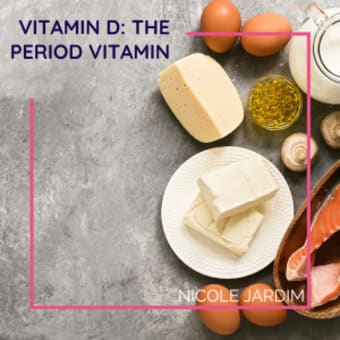
On top of the sun exposure problem, vitamin D is extremely difficult to obtain in adequate amounts from food alone. The richest food sources — fatty fish like wild salmon and sardines, cod liver oil, and egg yolks from pasture-raised hens — contribute meaningful amounts, but nowhere near enough to compensate for a lack of sun. Fortified foods like milk and orange juice contain the less effective D2 form in modest quantities.
There are also several factors that make deficiency more likely even when sun exposure is reasonable: low magnesium levels (magnesium is required for the enzymes that activate vitamin D), gut malabsorption conditions like celiac disease or Crohn's, obesity (vitamin D is fat-soluble and gets sequestered in adipose tissue), and chronic inflammation — which is itself exacerbated by low vitamin D, creating a difficult cycle to break.
How Low Vitamin D Affects Your Menstrual Cycle
Vitamin D receptors are densely expressed in the ovaries, uterus, and endometrium, which means it plays a direct role in how your cycle functions. Research consistently shows that women with low vitamin D are significantly more likely to experience the following:
Painful Periods (Dysmenorrhea)
One of the most compelling areas of research involves primary dysmenorrhea — painful periods not caused by an underlying condition like endometriosis. Several randomized controlled trials have found that a single high dose of vitamin D given shortly before a period begins significantly reduces menstrual pain, with some studies showing reductions comparable to taking an anti-inflammatory like ibuprofen. The mechanism appears to involve vitamin D's ability to reduce prostaglandins — the inflammatory compounds that cause uterine cramping — and to modulate the immune response in the uterine lining.
PCOS
Polycystic ovary syndrome and vitamin D deficiency frequently coexist, and the relationship appears to be bidirectional. Low vitamin D is associated with worse insulin resistance, higher androgens, more irregular cycles, and reduced ovulation rates in women with PCOS. Studies using vitamin D supplementation in women with PCOS have shown improvements in menstrual regularity, insulin sensitivity, and lipid profiles. Vitamin D also appears to support follicular development and healthy ovarian function at a cellular level.
Endometriosis
Vitamin D has potent anti-inflammatory and immune-modulating properties that make it particularly relevant to endometriosis, a condition driven largely by immune dysregulation and chronic pelvic inflammation. Research shows that women with endometriosis tend to have lower vitamin D levels than women without the condition, and that vitamin D receptors in endometrial tissue respond to vitamin D by reducing the proliferation and survival of endometrial cells outside the uterus. While supplementation is not a treatment for endometriosis, maintaining adequate levels is one part of a broader anti-inflammatory approach to managing the condition.
Fibroids
Uterine fibroids are benign but often symptom-causing growths in the uterine wall. Evidence suggests that vitamin D can inhibit the growth of fibroid cells, and that women with fibroids — particularly Black women, who are both at higher risk for fibroids and more likely to have low vitamin D — tend to have lower serum vitamin D levels. Some researchers have proposed vitamin D deficiency as a modifiable risk factor for fibroid development, though this area of research is still evolving.
Fertility and Pregnancy
Vitamin D supports the implantation environment in the uterus by modulating immune tolerance — the process by which the body accepts rather than attacks an embryo. Low vitamin D is associated with lower IVF success rates, higher rates of miscarriage, and worse pregnancy outcomes. The vitamin D receptor is also present in the corpus luteum, the structure that forms after ovulation and produces progesterone, suggesting vitamin D may support the luteal phase of the cycle and healthy progesterone output.
The Thyroid Connection
The thyroid gland is another major site of vitamin D receptor expression. Your thyroid hormones — T3 and T4 — work in close coordination with vitamin D to regulate metabolism, energy production, ovulation, and the menstrual cycle. Thyroid dysfunction and vitamin D deficiency frequently appear together, and there's a well-documented association between low vitamin D and autoimmune thyroid conditions like Hashimoto's thyroiditis and Graves' disease.
Vitamin D is a key regulator of the immune system, and autoimmune thyroid disease is fundamentally an immune problem. Several studies have found that vitamin D supplementation reduces levels of thyroid antibodies (TPO antibodies and TgAb) in people with Hashimoto's, particularly in those who were deficient at baseline. For anyone dealing with thyroid-related menstrual disruption — irregular cycles, anovulation, heavy periods, or short luteal phases — checking vitamin D status is an important part of the full thyroid picture.
How to Test Your Vitamin D Levels
The test you want is called a 25-hydroxyvitamin D blood test, written as 25(OH)D on lab forms. This is the storage form of vitamin D and the most accurate reflection of your overall vitamin D status. It is available through most standard labs and can be ordered by your doctor or, in many states, ordered directly without a prescription.
You can learn more about what to ask for and how to interpret results in this guide to how to test your vitamin D levels.
Reference ranges matter here. Conventional labs often flag anything above 20 ng/mL as "normal," but functional medicine practitioners generally consider the optimal range for hormonal health and immune function to be 50–80 ng/mL. There's a meaningful difference between being technically not-deficient and being at a level where vitamin D can actually do its job throughout your body. If your result comes back at 32 ng/mL, your doctor may say you're fine — but that level is unlikely to support the immune, ovarian, and thyroid functions we've been discussing here.
How to Raise Your Levels Safely
Sun Exposure First
Sun exposure is the most natural and effective way to raise vitamin D, and it's worth prioritizing before turning to supplements. The goal is direct midday sun (between roughly 10 a.m. and 2 p.m.) on as much skin as possible, without sunscreen, for 10 to 30 minutes depending on your skin tone and latitude. Darker skin requires longer exposure. This isn't about burning — it's about getting enough UVB light on the skin before the synthesis response shuts off.
Address Cofactors
Before and alongside any supplementation, it's worth addressing two nutrients that directly affect how well your body makes and uses vitamin D:
- Magnesium is required by the enzymes that convert vitamin D into its active hormonal form. Many people with low vitamin D are also low in magnesium, and supplementing with D without addressing magnesium can produce limited results. Magnesium glycinate or malate at 300–400 mg per day is a good starting point.
- Vitamin K2 works in concert with vitamin D to direct calcium to the bones where it belongs, rather than into soft tissues and arteries. When supplementing with vitamin D, K2 should almost always be included. Look for the MK-7 form of K2 at 100–300 mcg per day.
- Boron is a lesser-known vitamin D cofactor that can be assessed through hair tissue mineral analysis (HTMA) if low levels are suspected.
Supplementing with Vitamin D3
If testing confirms your levels are below 30 ng/mL, supplementation is appropriate. The key points:
- Use D3 (cholecalciferol), not D2 (ergocalciferol). D3 is the form your skin produces and raises serum levels significantly more effectively than D2.
- Typical dosing for deficiency: 5,000 IU per day of a quality vitamin D3, taken with a meal containing fat (vitamin D is fat-soluble). A combined D3 + K2 product is ideal.
- Maintenance dosing once levels are within healthy range: 2,000 IU per day.
- Retest after 3 months to assess your response and avoid over-supplementation. Vitamin D toxicity is rare but real — it occurs from sustained very high doses, not from sun exposure.
- Products like Seeking Health Vitamin D3 + K2 Liquid or capsules combine both cofactors in a single supplement, which simplifies the protocol.
It's important to note: if your levels are currently above 30 ng/mL, there is generally no need to supplement at high doses. Addressing cofactors like magnesium and K2 and increasing sensible sun exposure may be sufficient to move levels into the optimal range.
Food Sources
While food alone is unlikely to correct a true deficiency, incorporating vitamin D-rich foods supports your overall status and comes with additional nutritional benefits:
- Wild-caught salmon (600–1,000 IU per 3.5 oz serving)
- Sardines and mackerel
- Cod liver oil (one of the richest food sources, plus omega-3s)
- Egg yolks from pasture-raised hens
- Beef liver
- Sun-exposed mushrooms (flipping them gill-side up in direct sun for several hours significantly raises their D2 content)
Get your personalized hormonal health protocol
Take the free Hormone Health Assessment — 30 questions about your cycle, symptoms, and lifestyle — and receive a tailored action plan built for your body.
Take the Free Assessment →Putting It All Together
Vitamin D is one of the most impactful and most overlooked pieces of the menstrual health puzzle. If you have painful periods, irregular cycles, PCOS, suspected endometriosis or fibroids, a thyroid condition, or are working on fertility, getting a 25(OH)D test is one of the most useful and affordable things you can do. A simple blood draw can tell you whether this "period vitamin" is quietly working against you — and give you a clear path to fix it.
The protocol is not complicated: test first, address cofactors (magnesium and K2), get sensible sun exposure, and supplement with D3 only if your levels indicate a need. Retest in three months. For most women, moving vitamin D from deficient into the optimal 50–80 ng/mL range is a meaningful step toward better periods and better hormonal health overall.