
If I had to choose a single supplement to recommend to almost every woman I work with, magnesium would be at the very top of the list. That is not an exaggeration. Magnesium is a cofactor in more than 300 enzymatic reactions in the human body — reactions that touch everything from energy production to DNA synthesis, nerve signaling, muscle contraction, and hormone regulation. When magnesium is low, virtually every system in the body feels it.
And low it often is. Estimates suggest that up to 75 percent of adults in Western countries do not meet the recommended daily intake for magnesium from diet alone. For women dealing with hormonal symptoms — PMS, painful periods, poor sleep, anxiety, blood sugar dysregulation, or persistent migraines — magnesium deficiency is frequently a silent contributor that never gets addressed because it is rarely tested in routine bloodwork. (A note on testing: serum magnesium, the standard blood test, is a poor indicator of total body magnesium status because the body tightly regulates blood levels at the expense of cellular stores. Red blood cell magnesium or hair tissue mineral analysis gives a more accurate picture.)
Why So Many Women Are Deficient
The modern world is working against magnesium status in almost every direction at once. Several factors combine to leave most women running below optimal levels:
- Soil depletion: Magnesium content in fruits and vegetables has dropped significantly over the past several decades as intensive farming practices have depleted soil mineral levels. The same handful of almonds that provided your grandmother with meaningful magnesium may now provide significantly less.
- Processed food diet: Refined grains, sugar, and ultra-processed foods are nearly devoid of magnesium. When these foods displace whole grains, legumes, nuts, seeds, and leafy greens in the diet, magnesium intake drops sharply.
- Chronic stress: This is a major driver that is often overlooked. Stress triggers the release of cortisol and adrenaline, and both of these hormones increase urinary magnesium excretion — meaning you literally excrete more magnesium when you are stressed. And because low magnesium makes the stress response more reactive, this becomes a self-perpetuating cycle.
- Alcohol consumption: Even moderate alcohol intake increases renal magnesium excretion. Regular alcohol use is a meaningful contributor to depletion over time.
- Certain medications: Proton pump inhibitors (PPIs) impair magnesium absorption from the gut. Diuretics increase urinary excretion. Oral contraceptives have been associated with reduced magnesium levels in some research. If you take any of these, your baseline risk for deficiency is higher.
- Menstruation itself: Magnesium levels fluctuate across the menstrual cycle, typically dropping in the luteal phase — which is precisely when PMS symptoms peak. This is not a coincidence.
Magnesium's Specific Roles in Hormonal Health
Let me walk through the ways magnesium directly affects the symptoms and conditions I see most often in women with hormonal imbalances.
1. PMS and mood
Research consistently shows that women with PMS have significantly lower red blood cell magnesium levels than women without PMS — and that supplementation can reduce PMS severity. The mechanism makes sense: magnesium is required for the synthesis of serotonin (the neurotransmitter most associated with mood stability) and supports the activity of GABA, the brain's primary inhibitory neurotransmitter responsible for calm and relaxation. Low magnesium means less serotonin and less GABA activity, which translates directly into the anxiety, irritability, low mood, and overwhelm that characterize luteal phase PMS. Magnesium glycinate is the form I most commonly recommend for this purpose — it is highly absorbable, does not cause loose stools, and the glycine component has additional calming effects of its own. You can find my specific product picks in my Magnesium Options Protocol on Fullscript.
2. Period cramps
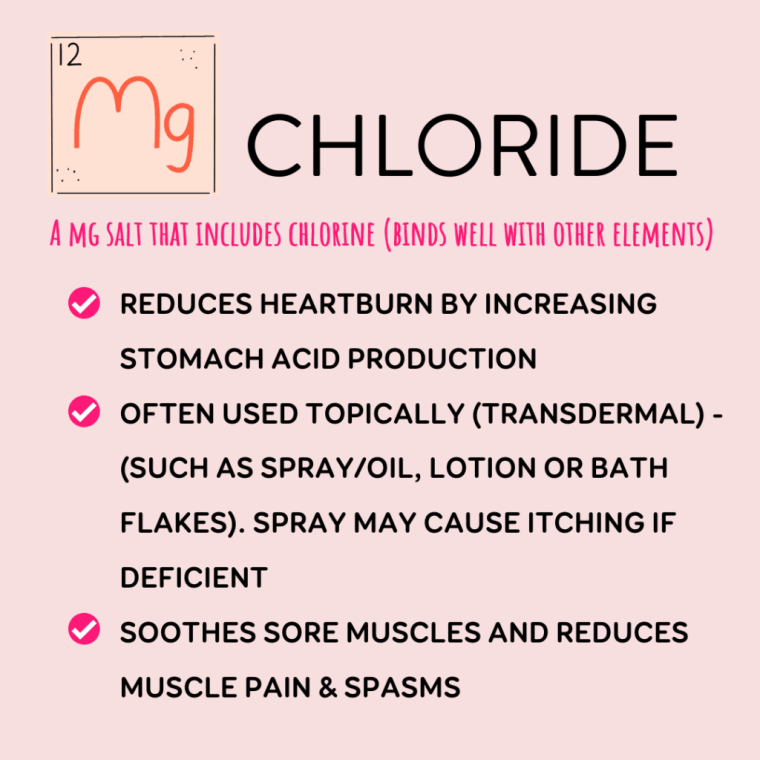
Magnesium is a natural muscle relaxant. It works by competing with calcium at the cellular level — while calcium triggers muscle contraction, magnesium promotes relaxation. In the context of menstrual cramps, magnesium helps relax the smooth muscle of the uterus directly. It also modulates prostaglandin synthesis; the inflammatory prostaglandins (particularly PGF2-alpha) that drive cramping and pain are produced in higher amounts when magnesium is low. Several clinical trials have found that magnesium supplementation reduces the severity of dysmenorrhea (painful periods) and decreases the need for pain medication over multiple cycles of use.
3. Blood sugar and insulin sensitivity
Magnesium is essential for insulin receptor function. Every step of insulin signaling — from insulin binding to its receptor to glucose uptake into cells — requires magnesium. When magnesium is deficient, insulin resistance tends to worsen. For women with PCOS, where insulin resistance is a central driver of the condition, this connection is particularly important. Research has found that women with PCOS have lower magnesium levels than women without PCOS, and that magnesium supplementation can improve insulin sensitivity and reduce fasting glucose. Given that blood sugar dysregulation amplifies almost every hormonal symptom — worsening androgen production, disrupting ovulation, driving weight gain — supporting insulin sensitivity with magnesium is a foundational strategy for cycle health.
4. Sleep
Magnesium plays a direct role in sleep quality through multiple pathways. It supports the activity of GABA, the neurotransmitter that quiets neural activity and allows the brain to shift into sleep mode. It also helps regulate melatonin, the hormone that governs the sleep-wake cycle. Low magnesium is associated with lighter, less restorative sleep, more nighttime awakenings, and difficulty falling asleep — particularly in the luteal phase when magnesium levels naturally dip. Magnesium glycinate taken in the evening (typically 200–400 mg, 30–60 minutes before bed) is one of the most reliably effective sleep-support interventions I recommend, with minimal side effects and no dependency risk.
5. Thyroid function
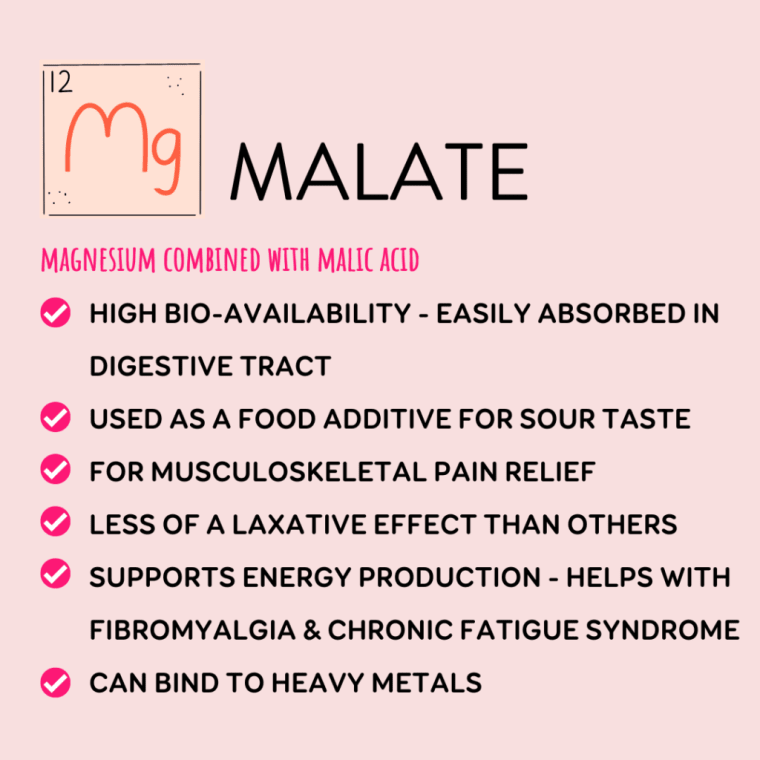
The connection between magnesium and thyroid health is less widely discussed but clinically relevant. Magnesium is required for the conversion of the inactive thyroid hormone T4 into active T3 — the form that cells can actually use. It is also involved in the synthesis of thyroid hormone itself and plays a role in the enzyme (thyroid peroxidase, or TPO) that produces thyroid hormones in the gland. Low magnesium can impair this conversion and contribute to the sluggishness, fatigue, and cold intolerance associated with low thyroid function, even when TSH and T4 look normal on standard panels.
6. Constipation
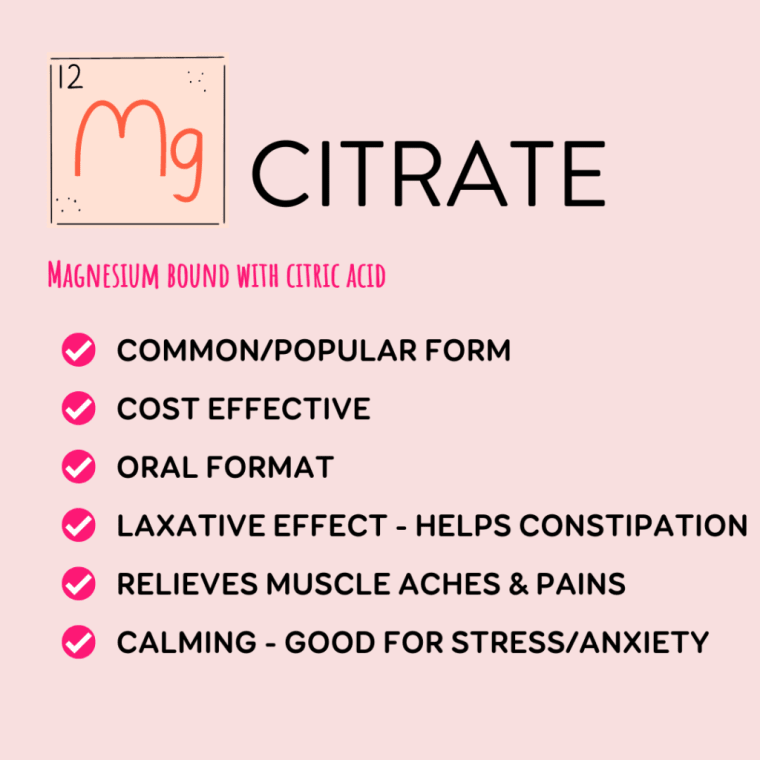
Magnesium draws water into the intestines by osmosis, which softens stool and stimulates bowel movements. This is why magnesium citrate and magnesium oxide are commonly used as laxatives. For women dealing with sluggish bowels — which is common in the luteal phase, during perimenopause, or with hypothyroidism — magnesium citrate at lower doses can support regularity without the cramping or dependency associated with stimulant laxatives. It is worth noting that constipation also slows estrogen clearance from the gut, making this more than just a comfort issue for women with hormonal symptoms.
7. Migraine prevention, including menstrual migraines
Magnesium deficiency is one of the best-documented triggers for migraines, and it is especially relevant for menstrual migraines — the migraines that occur in the days just before or during menstruation, driven by the sharp drop in estrogen at that phase of the cycle. Magnesium stabilizes blood vessel tone, reduces neuronal excitability, and inhibits the release of substance P (a pain-signaling molecule). Multiple clinical trials have found that daily magnesium supplementation significantly reduces the frequency of both general migraines and menstrual migraines over time. The American Academy of Neurology has listed magnesium as a preventive treatment option with evidence support. For women who experience predictable hormonal migraines, starting magnesium at ovulation and continuing through menstruation is a strategy worth trialing.
8. Stress and cortisol regulation
The magnesium-stress relationship is bidirectional and deeply intertwined with hormonal health. Magnesium modulates the hypothalamic-pituitary-adrenal (HPA) axis — the central control system for the stress response. When magnesium is adequate, the HPA axis responds to stress proportionately and shuts down appropriately when the threat has passed. When magnesium is low, the stress response becomes hyperreactive: cortisol goes higher, stays elevated longer, and the nervous system has a harder time returning to baseline. Chronic elevated cortisol, in turn, suppresses progesterone production (because cortisol and progesterone share the same precursor, pregnenolone), disrupts ovulation timing, and drives the luteal phase mood and anxiety symptoms that many women experience. Addressing magnesium deficiency is a foundational step in supporting adrenal and stress-related cycle disruption.
9. Bone health
Most conversations about bone health focus almost entirely on calcium — but calcium cannot do its job without magnesium, vitamin D, and vitamin K2 working alongside it. Magnesium is required for the conversion of vitamin D into its active form in the kidneys. Without adequate magnesium, supplementing with vitamin D can actually raise calcium levels in soft tissue rather than directing it into bones. Magnesium is also directly incorporated into the bone mineral matrix, and research has linked higher magnesium intake with greater bone mineral density. For women approaching perimenopause — a time of accelerating bone loss — getting magnesium right is as important as calcium, and far more commonly overlooked.
The Different Forms of Magnesium and Which to Use
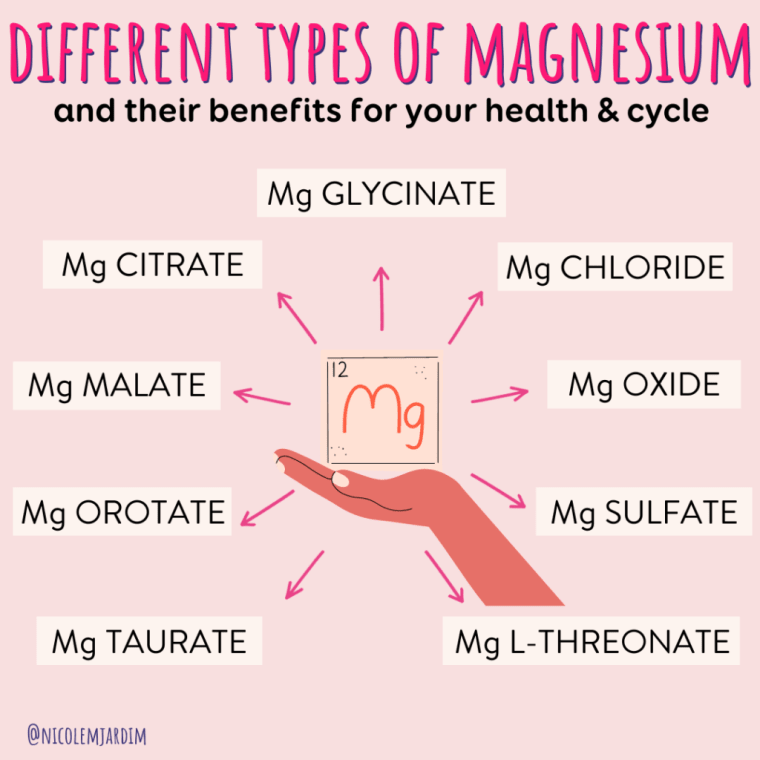
Not all magnesium supplements are the same. The form of magnesium determines how well it is absorbed, where it exerts its effects, and whether it is likely to cause gastrointestinal side effects. Here is a practical breakdown:
| Form | Best For | Notes |
|---|---|---|
| Magnesium glycinate | Sleep, anxiety, PMS, muscle tension, general daily use | Most absorbable form with least laxative effect. The glycine component adds calming benefits. Best choice for most women. |
| Magnesium citrate | Constipation, general supplementation | Good absorption. More laxative effect than glycinate — useful for sluggish bowels, but reduce dose if stools become too loose. |
| Magnesium malate | Energy support, fibromyalgia, muscle pain | Malic acid plays a role in the Krebs cycle (energy production). Good for women with fatigue and muscle aches. |
| Magnesium threonate | Brain health, cognitive function, memory | The only form shown to cross the blood-brain barrier effectively. Excellent if brain fog, cognitive decline, or neurological support is a priority. |
| Magnesium oxide | Avoid for general use | Poorest absorption of all forms (around 4%). Very common in cheap supplements. Use magnesium citrate instead if you want the laxative effect. |
My default recommendation for most women is magnesium glycinate for daily use — especially for PMS, sleep, anxiety, and general hormonal support. If constipation is a specific concern, magnesium citrate alone or a blend of citrate and glycinate works well. Magnesium malate and threonate are more targeted and can be layered in if energy or cognitive symptoms are prominent.
How Much Magnesium to Take
The latest research suggests that the optimal daily dose of magnesium for adults is around 300–400 mg of elemental magnesium per day. Some individuals with significant deficiency, high stress loads, or specific therapeutic goals may require more, but this range covers most women's needs.
A few practical points on dosing:
- Split your doses. Magnesium is better absorbed in divided doses than in a single large dose. Taking 150–200 mg in the afternoon and 150–200 mg in the evening is more effective and gentler on the gut than taking 400 mg at once.
- Start low and build up. If you are new to magnesium or sensitive to the laxative effect of citrate, start with 100–150 mg and increase gradually over one to two weeks. Loose stools are the most common reason women stop supplementing — starting low avoids this.
- Evening dosing for sleep. If your primary goal is better sleep, take the larger of your two doses 30–60 minutes before bed. For magnesium glycinate specifically, the typical dose for sleep support is 200–400 mg in the evening.
- Check your supplement label. Pay attention to the amount of elemental magnesium, not the total weight of the compound. A capsule of magnesium glycinate may weigh 500 mg, but only deliver 60–80 mg of elemental magnesium.
Food Sources of Magnesium
Supplementation is most effective when built on a dietary foundation. Prioritizing magnesium-rich whole foods means your supplement is filling gaps rather than doing all the work from scratch. The best food sources include:
- Dark chocolate (70% or higher): one ounce provides approximately 64 mg of magnesium — genuinely one of the richest sources per serving
- Pumpkin seeds: one ounce delivers around 150 mg — one of the highest food sources available
- Almonds and cashews: one ounce provides 76 mg and 74 mg respectively
- Leafy greens (spinach, Swiss chard, collard greens): one cup cooked spinach provides around 157 mg
- Legumes (black beans, edamame, lentils): a half cup of cooked black beans provides around 60 mg
- Avocado: a whole avocado provides approximately 58 mg, along with potassium and healthy fats
- Whole grains (quinoa, brown rice, oats): a cup of cooked quinoa provides around 118 mg
- Fatty fish (salmon, mackerel): a 3-ounce serving provides 26–30 mg alongside omega-3s and vitamin D
A genuinely magnesium-rich diet — one built around seeds, nuts, leafy greens, legumes, and whole grains — can deliver 300–400 mg per day. But as discussed above, soil depletion and the practicalities of modern eating mean most women do not consistently hit this in practice, which is where supplementation fills in.
Transdermal Magnesium: Epsom Salt Baths
Beyond oral supplementation, transdermal magnesium — absorbed through the skin — is a useful complement, particularly for muscle relaxation, stress relief, and gentle cycle support. Epsom salt (magnesium sulfate) baths are the most accessible form. Adding one to two cups of Epsom salts to a warm bath and soaking for 20 minutes, two to three times per week, provides meaningful relaxation benefits and may support magnesium levels, though the evidence for significant systemic absorption through skin is less robust than for oral magnesium. The parasympathetic (rest-and-digest) benefit of a warm bath itself is real and supports the same nervous system reset that oral magnesium supports biochemically. Magnesium sulfate topical sprays (often marketed as magnesium oil) are another option for localized muscle tension or restless legs.
Transdermal magnesium works best as a complement to oral supplementation, not a replacement for it.
Signs of Too Much Magnesium
Magnesium toxicity from supplementation is rare in healthy adults with normal kidney function because the kidneys efficiently excrete excess magnesium. The first and most common sign that you are taking too much is loose stools or diarrhea — the body's way of clearing excess through the gut. If this happens, reduce your dose by half and build back up more slowly. Switching from magnesium citrate to glycinate also reduces laxative effects significantly at the same dose.
True toxicity — involving low blood pressure, slowed heart rate, or extreme lethargy — is generally only seen at very high supplemental doses (over 5,000 mg per day) or in individuals with impaired kidney function. If you have kidney disease, consult with your doctor before supplementing with magnesium.
Not sure where to start with hormonal symptoms?
Take the free Hormone Health Assessment to get a personalized protocol based on your specific symptoms and cycle — including targeted supplement guidance. It takes just a few minutes and gives you a clear place to begin.
Take the Free Assessment →