
Your period is supposed to be predictable. You track it, you plan around it, and then — without warning — it decides to do something completely different. It arrives early. It is three days late when you are not pregnant. The flow is lighter than usual, or suddenly heavier. You get some spotting mid-cycle that was never there before. Or the whole cycle just feels off in a way you cannot quite name.
Here is what I want you to know before we go any further: most of what feels like your period "playing tricks on you" is actually meaningful biological information. Your cycle is not malfunctioning — it is communicating. The question is whether what you are experiencing is normal physiological variation, a response to something in your life that has shifted, or a signal that something deeper deserves attention.
Let us work through this systematically.
First: What Is Actually a Normal Cycle?
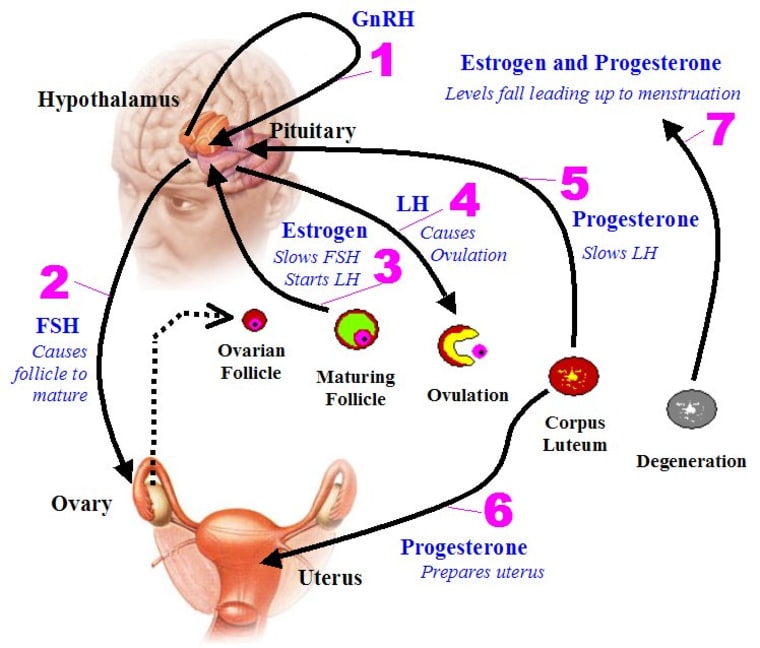
Before you can identify what is irregular, you need to know what irregular actually means — and most people have been given a much narrower definition than the science supports.
A normal menstrual cycle length is anywhere from 21 to 35 days, measured from the first day of one period to the first day of the next. That is a 14-day range that is considered completely healthy. A 24-day cycle is normal. A 34-day cycle is normal. What matters is consistency — and even that has natural variation built in.
Here is what surprises many people: a cycle that varies by up to 7 days from month to month is within the range of normal variation. If your cycle is usually 28 days but occasionally runs 25 or 31 days, that is not a disorder. That is a body responding to the countless variables that influence the hormonal cascade every single month.
What counts as a "normal" period
Cycle length: 21–35 days | Bleeding duration: 3–7 days | Flow: light to heavy with a predictable pattern | Month-to-month variation: up to 7 days either direction. A cycle that changes within these parameters each month is not irregular — it is responsive.
True irregularity — the kind that warrants investigation — is when your cycle consistently falls outside the 21–35 day range, when variation exceeds 7–9 days regularly, when periods stop altogether for 3 or more months (amenorrhea), or when new and significant changes appear in your cycle that persist across multiple months without an obvious explanation.
The Most Common "Tricks" Your Period Plays — and Why
Your Period Arrives Later Than Expected
A late period is one of the most anxiety-inducing cycle changes, and pregnancy is usually the first thing that comes to mind. But a late period that is not pregnancy almost always means one thing: ovulation was delayed.
Here is why that matters. Your period does not arrive on a fixed schedule from your last period. It arrives approximately 12 to 14 days after ovulation (the luteal phase). If ovulation happens later than usual in a given cycle, your period will arrive later. The follicular phase — the first half of the cycle, from menstruation through ovulation — is the variable one. It can shorten or lengthen considerably depending on what is happening in your body and life.
The most common reasons ovulation gets delayed: stress (acute or chronic), illness, significant changes in sleep, travel across time zones, intense exercise changes, dramatic dietary shifts, or low body weight. All of these signal the hypothalamic-pituitary-ovarian (HPO) axis that conditions are not ideal for reproduction right now, and ovulation is postponed accordingly.
Your Period Arrives Earlier Than Expected
An early period usually means one of two things: either ovulation happened earlier than usual that cycle (perhaps because the follicular phase was shorter, which can happen with perimenopause or higher FSH), or — more commonly — progesterone dropped earlier than it should have in the luteal phase, causing the lining to shed before the full 12–14 days have elapsed.
Early periods combined with a short luteal phase (under 11 days from ovulation to the start of bleeding) are worth paying attention to. A consistently short luteal phase can impair fertility and is often associated with low progesterone, high stress, thyroid dysfunction, or elevated prolactin.
Your Flow Changes Dramatically Month to Month
Some fluctuation in flow is completely normal — a stressful month may produce a lighter period, a cycle in which you ovulated strongly may produce a heavier one. But if your flow is suddenly and consistently much heavier or much lighter than your normal baseline, that deserves investigation.
Heavy bleeding (soaking a pad or tampon every hour or passing clots larger than a quarter) can point to fibroids, adenomyosis, endometriosis, thyroid dysfunction, or low progesterone relative to estrogen. Significantly lighter periods can indicate low estrogen, caloric restriction, extreme exercise, or the natural hormonal changes of approaching perimenopause.
You Get Mid-Cycle Spotting Out of Nowhere
Spotting that appears mid-cycle can catch you completely off guard — especially if it has never been part of your cycle pattern before. Light spotting around ovulation (days 12–16 in a typical cycle) is actually a recognized phenomenon caused by the brief estrogen dip that precedes the LH surge. It is generally benign and resolves within a day or two.
Spotting at other times in the cycle, or new spotting that did not used to be there, has a longer list of potential causes. For a complete breakdown by cycle timing and root cause, see the article on why you might be spotting.
Your Cycle Pattern Changes for Several Months in a Row
A single unusual cycle is almost never cause for alarm. Two or three cycles in a row that are significantly different from your baseline — shorter, longer, lighter, heavier, or accompanied by new symptoms — is worth paying more attention to. That kind of sustained shift usually means something in your internal or external environment has changed in a way your body has not yet adapted to, or it can be an early signal of a hormonal condition worth exploring.
Root Causes of Irregular or Unpredictable Cycles
Stress — Physical and Psychological
Chronic stress is one of the most common and most underestimated drivers of cycle irregularity. The connection is direct: when the body perceives sustained threat — whether that is work pressure, relationship conflict, undereating, overtraining, or illness — the hypothalamus reduces its output of GnRH (gonadotropin-releasing hormone), which in turn lowers FSH and LH, which disrupts follicle development and can delay or suppress ovulation entirely.
This is not a malfunction. It is a protective mechanism. The HPO axis is one of the first systems to go "non-essential" under stress, because reproduction is not the priority when survival is being threatened. But the downstream effect is a cycle that becomes irregular, unpredictable, or stops altogether.
Thyroid Dysfunction
The thyroid is intimately connected to every stage of the menstrual cycle, and thyroid problems — particularly subclinical hypothyroidism and Hashimoto's thyroiditis — are among the most commonly missed contributors to irregular cycles. Thyroid hormone works alongside FSH to support follicle development; without adequate T3, follicles do not grow properly. Hypothyroidism also raises prolactin, which disrupts the pulsatile secretion of GnRH, which then impairs the entire hormonal cascade that drives ovulation.
If your cycles have become irregular alongside fatigue, cold intolerance, hair thinning, constipation, or brain fog, a full thyroid panel — TSH, free T3, free T4, and thyroid antibodies — is essential. TSH alone misses a lot.
Coming Off Hormonal Contraceptives
If you have recently stopped hormonal birth control, irregular cycles in the first three to six months (and sometimes longer) are extremely common. Hormonal contraceptives suppress the HPO axis, and after stopping, the axis needs time to recalibrate and resume its natural rhythm. Some people's cycles bounce back within a month or two; others take significantly longer, particularly if cycles were irregular before starting contraception. What contraception does is mask — not fix — underlying cycle issues.
Diet Changes and Undereating
Significant caloric restriction, very low-fat diets, or dramatic weight loss send a clear signal to the hypothalamus: resources are scarce. The result is often suppressed or delayed ovulation, lighter periods, or missed periods entirely. This is particularly well documented in athletes, dancers, and anyone who has gone through a period of restricted eating. The body prioritizes survival over reproduction. Even short-term, acute undereating — a restrictive week before a vacation, for instance — can shift the timing of that month's ovulation.
Exercise Changes
A sudden increase in training intensity or volume — starting a new program, training for a race, adding significantly more cardio — is a physical stressor that can disrupt the HPO axis in the same way psychological stress does. This is compounded if the increase in exercise is not matched by an increase in calories. Conversely, going from an active lifestyle to a sedentary one can also shift cycle patterns, though this is less commonly discussed.
Travel and Jet Lag
Crossing multiple time zones disrupts circadian rhythm, which is more intimately connected to the hormonal cycle than most people realize. Melatonin (regulated by light exposure and circadian rhythm) interacts with GnRH secretion. A significant time zone shift, particularly for someone whose cycle is already sensitive, can delay ovulation that cycle and shift the expected arrival of the next period by several days.
Illness
Any significant illness — flu, COVID, a serious infection — is a physiological stressor that can delay ovulation in the cycle during which you were sick, or in the one that follows. The more severe the illness, the more likely it is to affect cycle timing. If your period is late and you were sick in the past several weeks, that is a very likely explanation.
Hormonal Transitions: Perimenopause
Perimenopause — the transition into menopause, which can begin in the late 30s or early-to-mid 40s — is one of the most significant and most overlooked causes of cycle irregularity. As ovarian reserve declines, FSH rises in an attempt to stimulate follicles that are becoming less responsive. This produces erratic estrogen and progesterone levels, cycles that shorten or lengthen unpredictably, heavier or lighter periods, new mid-cycle spotting, and symptoms like hot flashes, sleep disruption, and mood changes.
Perimenopause is not a sudden event — it is a multi-year transition. If you are in your late 30s or 40s and your previously regular cycle has become unpredictable, this is a very real possibility to consider alongside the other root causes.
Conditions Affecting Ovarian Function
PCOS (polycystic ovary syndrome) is one of the most common causes of chronic cycle irregularity. It is an inflammatory endocrine disorder — not simply a gynecological problem — characterized by elevated androgens, disrupted LH/FSH ratios, and follicles that fail to reach ovulation. Cycles can be very long, very short, or absent altogether. If you have irregular cycles alongside signs of elevated androgens (acne, excess hair growth, hair thinning on the scalp) and/or blood sugar dysregulation, PCOS deserves proper evaluation.
Primary ovarian insufficiency (POI) — reduced ovarian function before age 40 — is less common but can also cause irregular cycles, elevated FSH, and symptoms of low estrogen. If cycles have become irregular and you are under 40 with no other clear explanation, FSH and AMH levels are worth checking.
How to Tell If Your Irregularity Is a Sign of Something More
Not all irregular cycles require urgent investigation, but certain patterns consistently point to something that deserves a closer look. The following are meaningful signals — not causes for panic, but reasons to gather more information:
- Cycles consistently shorter than 21 days or longer than 35 days, across 3 or more months
- No period for 90 days or more, outside of pregnancy or perimenopause
- Sudden, significant change in flow with no clear lifestyle explanation (much heavier or much lighter)
- New pelvic pain accompanying cycle changes
- Cycle irregularity alongside symptoms of thyroid dysfunction, blood sugar issues, or elevated androgens
- A period that repeatedly starts, stops, and starts again within the same bleed
- Cycles that have become irregular alongside hot flashes, night sweats, or vaginal dryness before age 45
When to See a Doctor
- No period for 3 or more months (outside of pregnancy or known perimenopause)
- Cycles consistently outside the 21–35 day range for 3+ months in a row
- Sudden, unexplained heavy bleeding — soaking through pads or passing large clots
- Cycle irregularity with significant pelvic pain, especially mid-cycle or during sex
- Any bleeding after menopause (12+ months without a period)
- Irregular cycles alongside signs of thyroid dysfunction, hair loss, or extreme fatigue
The Difference Between Irregular and Variable
This distinction matters, and it is one I want to spend a moment on. The menstrual cycle is not a machine set to a fixed 28-day clock. It is a dynamic, responsive system governed by the HPO axis, which is in constant conversation with the adrenal glands, the thyroid, the immune system, and the brain. Every month, your cycle reflects what has been happening in your body and life.
A cycle that runs 26 days one month and 31 days the next is not broken. It is variable. A cycle that is never predictable, that runs 18 days one month and 47 days the next, that is associated with other symptoms — that is irregular in the clinical sense, and worth understanding at the root cause level.
The goal is not to have a perfectly identical 28-day cycle every month. The goal is to understand your cycle well enough that you can recognize when something has genuinely shifted — and know what to do with that information.
What to Track to Start Understanding Your Pattern
Three months of consistent cycle tracking will tell you more about your hormonal health than almost anything else. You do not need to track everything at once. Start with the basics and build from there. At minimum, record:
- Cycle day 1 — the first day of full red bleeding (not spotting). This is what you use to calculate cycle length.
- Cycle length — count the days from day 1 of one period to day 1 of the next. Do this for 3–6 cycles and note the range.
- Period duration — how many days does the actual bleed last?
- Flow — light, medium, or heavy on each day? Are you passing clots? Do you have a predictable flow pattern (typically heavier on days 2–3 and lighter toward the end)?
- Spotting — any light bleeding before, after, or between periods? Note the color (brown, pink, bright red) and where in the cycle it falls.
- Symptoms — pain, significant mood changes, bloating, breast tenderness, sleep disruption. Noting when in the cycle these appear is valuable data.
- Relevant life events — travel, illness, high-stress periods, major dietary or exercise changes. These will help you correlate cycle changes with their likely causes.
For a deeper understanding of why each phase of the cycle looks and feels the way it does, the article on the four phases of the menstrual cycle is a good place to start. Understanding what is happening hormonally in each phase is what transforms tracking data from numbers into meaning.
Get your personalized hormonal health protocol
Take the free Hormone Health Assessment — 30 questions about your cycle, symptoms, and lifestyle — and receive a tailored action plan built for your body.
Take the Free Assessment →Supporting a More Consistent Cycle
If your cycles have been unpredictable and you want to support more regularity, the most impactful things you can do are the least glamorous: eat enough, sleep enough, and reduce your allostatic load. The HPO axis is genuinely sensitive to energy availability, circadian rhythm, and stress — and no supplement protocol will override a body that is chronically under-fueled, under-slept, or under siege from stress.
Beyond the foundations, targeted support depends on what is driving the irregularity. If thyroid dysfunction is involved, that needs to be properly diagnosed and treated — nutrition and lifestyle support the thyroid, but they do not replace thyroid hormone when a true deficiency exists. If PCOS is the driver, addressing inflammation and insulin sensitivity is central to the work. If you are in perimenopause, understanding which hormones are shifting and when allows you to meet your body where it is rather than fighting it.
The key nutrients that support the HPO axis broadly — regardless of the specific cause of irregularity — include magnesium (critical for the nervous system and the stress response that impacts the axis), zinc (essential for follicle development and LH production), vitamin B6 (supports progesterone and helps regulate prolactin), and vitamin C (concentrated in the corpus luteum and important for progesterone synthesis). Adequate dietary fat is also non-negotiable: cholesterol is the raw material for all steroid hormones, including estrogen and progesterone. A very low-fat diet literally restricts hormone production at the source.
If your cycle was previously regular and became irregular after a significant life event, a period of restriction, or a major health change — and you have addressed the obvious drivers — give your body time. The HPO axis is resilient. With consistent support, cycles often normalize within three to six months of addressing the root cause.